Projects
My lab’s current work span several threads and undergraduate researchers play key roles on all projects:
Exposure to Toxic Chemicals from Ski Waxing and Tuning


Per- and polyfluoroalkyl substances (PFAS) and other emerging chemistries are used as additives in ski and snowboard wax to improve glide and the application of these waxes results in human exposure through all major exposure routes (inhalation, ingestion, and dermal absorption). Sharpening edges of downhill skis and snowboards generates metal filings that reflect additional exposure risks for people maintaining their own equipment or occupying spaces where snow sport equipment takes place. Our research seeks to better understand people's exposure and associated health consequences using both quantitative and qualitative methods. We are also investigating emerging chemistries in proprietary wax formulations.
PFAS Bioaccumulation in Aquatic Food Webs and Human Health Risk from Seafood Consumption
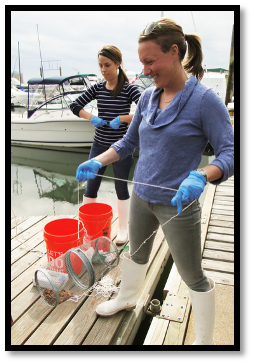
Per- and polyfluoroalkyl substances (PFAS) are ubiquitous in the environment, but are known to be present in highest concentrations near sources such as industrial sites, wastewater treatment plants, and areas where aqueous film-forming foams (AFFF) were used in firefighting operations. Once in aquatic environments, these highly durable chemicals persist for centuries and bioaccumulate in food webs. Our research seeks to understand ecological and organismal drivers of bioaccumulation. We also seek to quantify PFAS concentrations in edible fish and shellfish species from aquatic, estuarine, and marine ecosystems to understand people’s exposure to PFAS through seafood consumption. Because most fish consumption guidance issued by public health and environmental agencies has historically focused on legacy pollutants like mercury and polychlorinated biphenyls (PCBs), we also investigate questions about whether existing fish consumption advisories sufficiently protect human health from PFAS exposure, and how simultaneous risk and benefits of seafood consumption should be considered in the context of PFAS exposure.
Effects of Perinatal and Early Life Exposure to Environmental Chemicals on Cardiometabolic Health

Pregnancy and early life represent periods of rapid growth and development and exposure to toxic chemicals during these windows of time can have outsized influences on health across the rest of a person’s life and, in some cases, in their offspring. For this reason, understanding it is important to characterize exposures among pregnant people and their offspring. My research seeks to understand how seafood consumption influences peoples’ body burdens of PFAS measured in blood collected during pregnancy and how these exposures are associated with both fatty acid and cholesterol profiles as biomarkers of cardiometabolic health. I also seek to understand how young children’s exposure to a wide range of environmental chemicals may influence cardiometabolic health in childhood.
My research is supported by numerous competitive grants from the National Institutes of Health (NIH), National Science Foundation (NSF), United States Geological Survey (USGS), and initiatives funded by the United States Environmental Protection Agency (EPA) and National Oceanographic and Atmospheric Administration (NOAA), as well as institutional pilot funds. I maintain active collaborations with colleagues at Boston University, Dartmouth College, the University of Vermont, the University of Washington, and Purdue University, among others.